
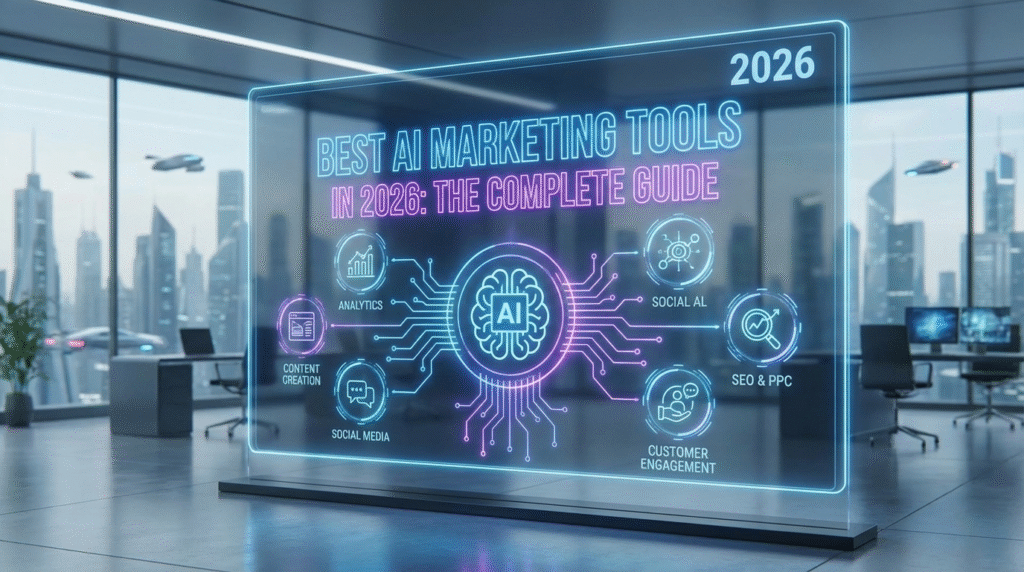
Digital marketing has undergone a complete structural evolution. The ongoing conversation is no longer about whether to test Artificial Intelligence, but rather how deeply and thoughtfully you can integrate it into your everyday growth architecture.
AI has moved well past simple task automation or generating basic text drafts. Modern growth ecosystems run on Agentic AI—intelligent, autonomous workflows where advanced algorithms do not merely suggest tweaks, but actively evaluate multi-channel performance, execute micro-budget reallocations, build hyper-granular customer cohorts, and optimize user journeys across touchpoints in real time.
Yet, technology represents only one half of the equation. The brands dominating markets right now are explicitly not replacing human talent with software; instead, they are deploying AI as an execution engine while doubling down on human taste, creative daring, cultural nuance, and deep emotional resonance.
Defining the Role of AI in Modern Digital Strategy
At its core, AI in digital marketing leverages machine learning frameworks, deep neural networks, natural language processing, and predictive analytics to process raw consumer data into immediate, strategic action.
Where traditional marketing workflows once demanded countless hours of manual data consolidation, tedious copy variations, and static email tree construction, modern teams use AI to set strategic directives and let autonomous agents execute the underlying heavy lifting.
Think of AI as an untiring senior strategist and analytical assistant operating continuously in the background. It identifies subtle behavioral patterns across millions of consumer signals instantly, drafts foundational creative concepts, and manages complex operational tasks. This liberates human marketers to double down on what machines cannot replicate: high-level vision, authentic storytelling, empathetic customer connection, and brand positioning.
Key Marketing Domains Transformed by Artificial Intelligence
1. Search Strategy: Generative Engine Optimization (GEO)
Traditional search engine optimization centered around static keyword placement and link building is no longer sufficient on its own. With search engines and discovery platforms prioritizing dynamic, synthesized AI answers over long lists of external links, brand visibility demands Generative Engine Optimization (GEO) and Answer Engine Optimization (AEO).
GEO focuses on contextual authority, semantic clarity, and comprehensive topical coverage. AI tools analyze broad intent behind queries, identify information gaps across existing web resources, and help creators structure deep, authoritative content hubs that conversational AI engines readily trust, synthesize, and cite directly within their generated responses.
2. High-Velocity Content Production with Human Editorial Control
Achieving consistent content output across multiple digital channels historically posed a massive operational bottleneck. AI writing platforms excel at overcoming creative stagnation, organizing messy notes into clear outlines, brainstorming unexpected campaign angles, and producing baseline social content.
However, unedited machine output inevitably feels flat, formulaic, and emotionally vacant. The industry-standard approach leverages a strict division of labor:
- Machine Generation: Ideation, structural frameworks, foundational research, data synthesis, and rapid asset iteration.
- Human Craftsmanship: Injecting lived experience, weaving in personal anecdotes, refining voice and cadence, verifying factual claims, and polishing emotional highlights.
3. Hyper-Personalization and Predictive Lifecycle Marketing
Broad, generic email blasts sent to an entire database now produce dwindling returns. AI algorithms track multi-touch consumer behaviors—evaluating precisely what products a user spent time exploring, where they hesitated, and when they are historically most receptive to messages—to deliver fully tailored experiences.
Advanced models automatically craft individual subject line variants, dynamically swap out product recommendations within the body of an email, predict account churn risk before it occurs, and dispatch tailored lifecycle incentives at the exact moment a customer is most likely to convert.
4. Autonomous Performance Advertising and Creative Testing
Digital advertising ecosystems operate almost entirely on complex machine learning algorithms. AI evaluates ad performance across channels every second, automatically shifting ad spend toward winning creative variations while pausing underperforming angles before budgets are wasted.
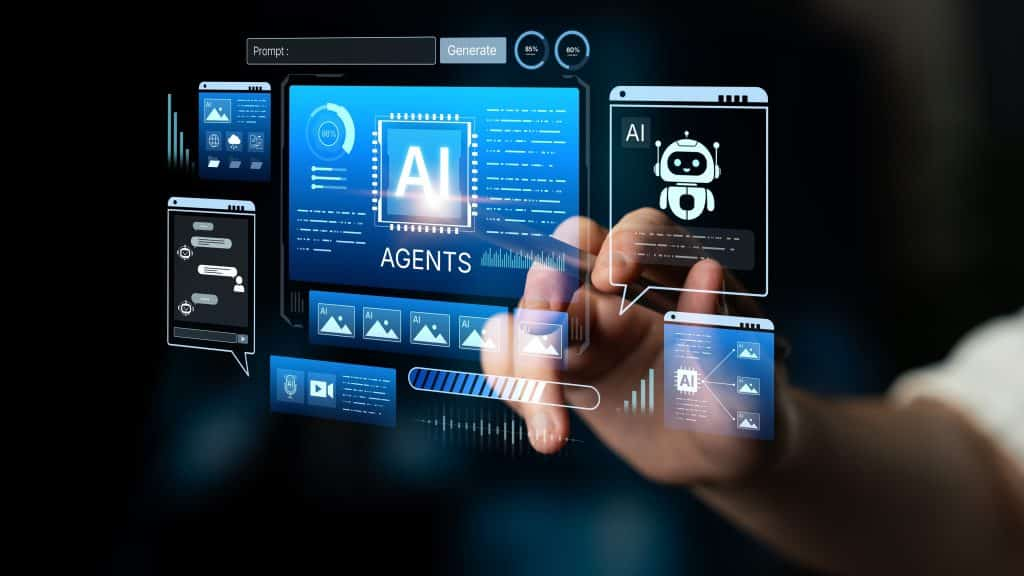
This real-time optimization levels the field for businesses of all sizes, allowing nimble teams to achieve elite conversion rates and return on ad spend without requiring massive, dedicated media-buying departments.
5. Advanced Conversational Marketing and Intelligent Support
Customer service has evolved beyond rigid, frustration-inducing decision trees. Modern conversational AI systems comprehend subtle language nuances, user sentiment, and intent. They can guide shoppers through complex product discovery, answer technical inquiries accurately, and resolve post-purchase service issues instantly around the clock, all while seamlessly maintaining the brand’s distinct voice.
Guardrails, Ethics, and Brand Integrity
Fact-Checking and Eliminating Hallucinations As AI systems become deeply embedded into business operations, operating with transparency and strict ethical standards is vital to safeguarding long-term customer trust.Generative AI models operate on statistical probability rather than absolute awareness.
They can, on occasion, present inaccurate data or non-existent facts with total confidence. Rigorous human review remains essential before any content, offer, or technical statement reaches the public.
Data Privacy and Security Standards
Personalization requires consumer data, but that data must be handled with utmost care. Businesses must respect evolving global privacy standards, practice transparent data collection, and ensure that customer information is never fed into unsecured, public AI models without strict enterprise data security protections in place.
Preserving Human Authenticity
Audiences appreciate speed and smooth service, but they actively penalize deception. Be transparent regarding how automation is used, and ensure that your overarching brand identity retains an undeniable human touch that resonates on a personal level.
Critical Competencies for the Modern Marketer
Thriving in an AI-enhanced landscape isn’t about learning how to code algorithms; it is about mastering the art of directing them effectively. The most essential skill sets now include:

- Strategic Prompting and Contextual Design: The ability to construct detailed frameworks, feed rich background data, and guide AI platforms to yield highly targeted, high-value outputs.
- Data Synthesis and Pattern Recognition: Looking beyond basic charts and graphs to uncover the underlying human motivations and behavioral trends driving the metrics.
- Mastery of Brand Voice and Narrative: A deep understanding of emotional nuance, cultural context, and empathetic connection that algorithms cannot simulate on their own.
- Editorial Auditing and Quality Assurance: Maintaining an unyielding bar for creative quality, ensuring every piece of collateral leaving your organization is accurate, engaging, and distinctly aligned with your brand identity.
A Phased Framework for AI Integration
To embed artificial intelligence into your marketing operations without overwhelming your team or compromising brand quality, implement a phased adoption plan:
┌─────────────────────────────────────────────────────────────────────────────┐
│                       THE THREE-PHASE ADOPTION PATH                         │
├─────────────────────────────────────────────────────────────────────────────┤
│ PHASE 1: EFFICIENCY & SPEED                                                 │
│ Focus on low-stakes operational tasks: generating content outlines, drafting │
│ social post variations, organizing raw research, and polishing headline options.│
│                                                                             │
│ PHASE 2: PROCESS AUTOMATION                                                 │
│ Connect AI to handle repetitive data processes: automated performance       │
│ reporting, smart audience segmentation, and conversational customer support.│
│                                                                             │
│ PHASE 3: PREDICTIVE & AGENTIC CAMPAIGNING                                   │
│ Deploy autonomous ad optimizations, predictive churn modeling, and dynamic  │
│ GEO-structured content networks across all primary customer touchpoints.    │
└─────────────────────────────────────────────────────────────────────────────┘
What AI in Digital Marketing Really Means
At its fundamental layer, AI in digital marketing leverages machine learning models, deep neural networks, natural language understanding, and predictive algorithms to convert vast oceans of raw unstructured data into hyper-targeted real-time decisions.
Instead of treating market research, creative production, and audience distribution as isolated, sequential tasks, modern AI ecosystems fuse them into an uninterrupted, feedback-driven cycle.
Think of modern AI systems as a team of hyper-specialized analytical assistants working continuously behind the scenes. They detect microscopic changes in consumer intent across millions of digital touchpoints, draft baseline campaign assets, and optimize underlying mechanics. This operational shift unburdens human strategists from repetitive execution, granting them the cognitive space required to craft memorable narratives, pioneer new market positioning, and build deep, authentic consumer relationships.
The Path Forward: Technology Amplifying Human Talent
Artificial Intelligence is not a replacement for human imagination, vision, or heart. It is the ultimate force multiplier.
By offloading repetitive data processing, complex campaign monitoring, and routine asset generation to intelligent systems, marketers free up their time to focus on strategic positioning, creative risk-taking, and building authentic relationships with their audience. The future of digital growth belongs to those who successfully pair machine speed with human soul.
FAQ’S
1. What is AI in digital marketing?
AI helps automate marketing tasks, analyze data, and improve customer engagement.
2. Can AI improve SEO?
Yes, AI assists with keyword research, content optimization, and SEO analysis.
3. Is AI useful for small businesses?
Yes, AI helps small businesses save time, automate tasks, and create more effective marketing campaigns.
4. Can AI replace digital marketers?
No, AI supports marketers, but human creativity, strategy, and decision-making remain essential.
5. What are the benefits of AI in digital marketing?
AI improves productivity, personalization, campaign performance, and customer experience.