

Artificial intelligence has moved from something that sounded futuristic to something many AI Tools people use every day. Whether you are writing an email, creating an image, researching a topic, editing a video, analyzing information, or simply trying to get more done in less time, there is probably an AI tool designed for it.
The challenge is no longer finding an AI tool. There are too many.New platforms appear constantly, existing tools add new features, and almost every software company now seems to have an AI-powered option. Some tools are genuinely useful, while others may look impressive but offer little value once you actually start using them.
That is why AI tool reviews matter.A useful review should go beyond saying that a tool is “powerful” or “smart.” It should explain what the tool actually does, who it is for, how easy it is to use, what features stand out, where it may fall short, and whether it fits a particular workflow.
What Are AI Tools?

AI tools are software applications that use artificial intelligence to help users complete specific tasks.
Depending on the tool, AI can generate text, understand documents, create images, summarize information, analyze data, produce audio, write code, automate repetitive work, or assist with research.
Some tools are built for one particular purpose, while others combine several AI capabilities into a single platform.
Common examples include tools for:
- Writing and editing
- Research
- Productivity
- Graphic design
- Image generation
- Video creation
- Audio and voice
- Coding
- Marketing
- Business automation
- Data analysis
- Customer support
- Education
- Content creation
The best tool depends heavily on what you are actually trying to accomplish.
Why AI Tool Reviews Are Useful
A tool can have dozens of features and still not be useful for everyone.
For example, a professional designer may need advanced creative controls, while a small business owner might simply want something that creates social media graphics quickly. A developer may care about coding assistance, whereas a student may be more interested in research and organization.
A good review helps answer practical questions before you spend time or money on a platform.
Instead of focusing only on a feature list, look at the complete experience.
Ask:
- What problem does the tool solve?
- Who is it designed for?
- Is it easy to learn?
- Which features are genuinely useful?
- Does it save time?
- How flexible is it?
- Does it integrate with other tools?
- Is there a free version?
- What does the paid plan add?
- Are there limitations worth knowing about?
These questions usually tell you more than a long list of technical specifications.
AI Writing Tools

AI writing tools are among the most widely used AI applications.
They can help with brainstorming, drafting, rewriting, summarizing, editing, outlining, and adapting content for different audiences.
For example, someone working on a blog post might use AI to develop an outline and generate ideas before rewriting the content in their own voice.
Businesses can also use writing tools for emails, product descriptions, marketing copy, internal documents, and customer communications.
But AI-generated writing should not automatically be treated as finished content.
Good writing still needs human judgment. Facts need to be checked, tone needs to match the audience, and generic wording often needs to be edited.
The best workflow is usually not “let AI write everything.” It is using AI as a helpful writing partner while keeping human control over the final result.
AI Image and Design Tools
AI has also changed the way people approach visual content.
Image-generation and design tools can help users create concepts, illustrations, backgrounds, marketing visuals, social media graphics, and creative experiments without starting every project from a blank canvas.
For beginners, this can make visual creation much less intimidating.
For experienced designers, AI can work as an additional source of ideas or a rapid prototyping tool.
When reviewing an AI design tool, consider:
- Image quality
- Prompt understanding
- Editing controls
- Style flexibility
- Resolution options
- Generation speed
- Commercial-use terms
- Ease of editing
- Available templates
- Export options
A beautiful demo image is only one part of the experience. The real question is whether the tool can consistently produce something useful for your particular needs.
AI Video Tools
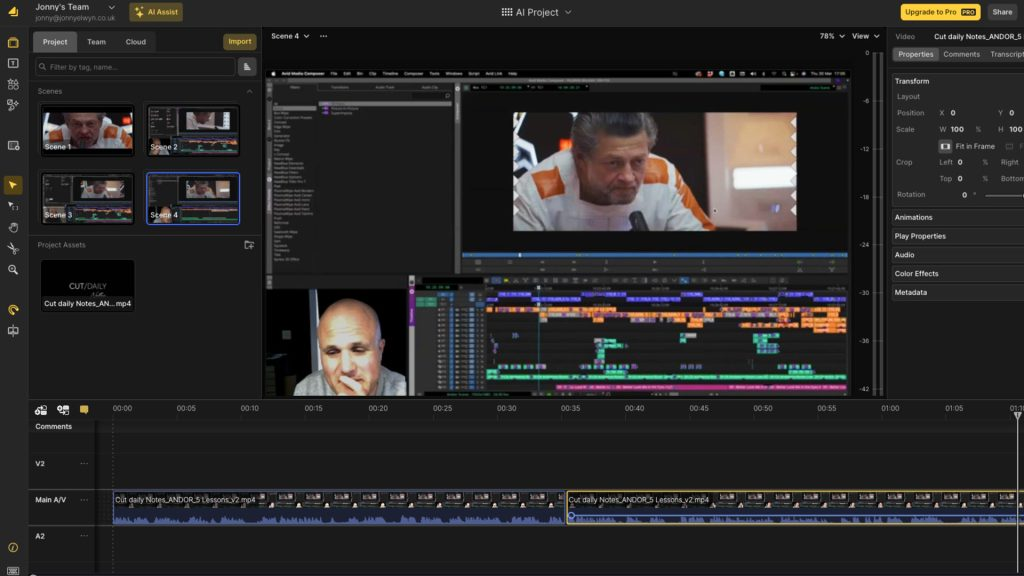
Video creation can take considerable time, especially when scripting, editing, adding captions, creating visuals, and producing multiple versions are all involved.
AI video tools aim to simplify parts of that process.
Depending on the platform, users may be able to generate video concepts, create scenes, produce voiceovers, add subtitles, edit footage, or turn written content into video.
These tools can be particularly useful for marketers, creators, educators, and businesses that need to produce content regularly.
When reviewing one, look beyond the promotional examples. Check how much control you have over the final video and how much manual editing is still required.
AI Coding Tools
AI coding assistants have become useful companions for developers and people learning to program.
They can help explain code, suggest implementations, identify potential problems, generate boilerplate, and assist with debugging.
For beginners, an AI coding tool can make unfamiliar concepts easier to understand. For experienced developers, it can reduce repetitive work and speed up certain parts of development.
However, generated code still needs to be reviewed.
An AI system can produce code that looks correct while containing bugs, security problems, outdated approaches, or logic that does not match the actual project requirements.
A good coding tool should support developers rather than replace careful testing and technical judgment.
AI Research and Productivity Tools
Research is another area where AI tools can save time.
Modern AI platforms can help organize information, summarize documents, generate notes, compare ideas, and turn large amounts of information into easier-to-read formats.
Productivity tools can also help with tasks such as:
- Meeting summaries
- Task organization
- Email drafting
- Note-taking
- Document analysis
- Information extraction
- Planning
- Scheduling
- Workflow automation
The biggest benefit is often not doing one large task automatically. It is removing dozens of small tasks that consume time throughout the day.
AI Tools for Business

Businesses are increasingly experimenting with AI across different departments.
Marketing teams may use AI for content ideas and campaign preparation. Customer support teams can use AI-assisted systems to handle common questions. Sales teams may use AI for research and communication. Operations teams can explore automation for repetitive workflows.
However, adding AI simply because it is trendy does not guarantee better results.
Before adopting a business AI tool, think about the actual problem first.
A useful question is:
“What repetitive or time-consuming task are we trying to improve?”
Once the problem is clear, it becomes much easier to evaluate whether an AI solution makes sense.
Features That Matter in an AI Tool
AI platforms often advertise a huge number of features. But more features do not automatically mean a better product.
Some features are worth paying particular attention to.
Ease of Use
A powerful tool is less useful if it takes hours to understand.
A clean interface, clear controls, helpful documentation, and a simple onboarding process can make a significant difference.
Output Quality
This is probably the most important factor.
Does the tool consistently produce useful results, or does every output require heavy editing?
Speed
If an AI tool saves time but takes too long to generate results, the overall benefit may be smaller than expected.
Customization
Different users need different levels of control. Some prefer simple prompts, while others want detailed settings and advanced editing options.
Integrations
A tool becomes more valuable when it fits naturally into the software you already use.
Pricing
A free plan can be useful for experimentation, but paid plans may offer higher limits, advanced features, or better performance.
Always look at what you actually receive for the price rather than choosing a plan based only on the number of features.
Free AI Tools vs Paid AI Tools

There is no universal answer to whether free or paid AI tools are better.
Free tools are excellent for testing an idea or handling occasional tasks. They can also be enough for users with relatively simple requirements.
Paid plans may make more sense for people who use AI regularly and need additional capacity, advanced features, faster processing, or business-focused functionality.
Before subscribing, ask yourself how frequently you will use the tool.
If you only need it once or twice a month, a premium subscription may not be necessary.
If it becomes part of your daily workflow, the time saved may make the cost easier to justify.
How to Review an AI Tool Properly
A useful AI tool review should feel practical rather than promotional.
Start by identifying the tool’s main purpose.
Then test the features that matter most for that purpose.
For example, if you are reviewing a writing tool, test several different types of prompts instead of relying on one impressive example.
Try:
- A simple task
- A detailed task
- A creative task
- A repetitive task
- A task requiring accuracy
- A task involving revisions
This gives you a much clearer idea of how the tool behaves in everyday use.
Things to Watch Out for When Using AI
AI tools can be extremely useful, but they are not perfect.
They can sometimes produce incorrect information, misunderstand instructions, create repetitive content, or confidently provide an answer that needs verification.
Privacy is another important consideration.
Before uploading sensitive documents or personal information, understand how the platform handles your data and what its terms say about storage and usage.
It is also worth checking whether the tool’s output can legally be used for your intended purpose, particularly for commercial projects.
AI Tools and Human Creativity
One of the biggest misconceptions about AI is that using it means giving up creativity.
In reality, AI can be used in many different ways.
A writer might use it to brainstorm ideas. A designer might use it to explore concepts. A marketer might use it to generate variations. A developer might use it to explore possible solutions.
The final direction can still come from the person using the tool.
The strongest results often come from combining machine assistance with human experience, taste, context, and decision-making.
How to Choose the Right AI Tool

Instead of looking for the “best AI tool” overall, look for the tool that best matches your specific task.
Start with your goal.
If your goal is writing, focus on writing capabilities.
If you need images, prioritize visual quality and editing flexibility.
If you need automation, look closely at integrations and workflow features.
If you are researching, focus on information handling, organization, and source transparency.
A simple approach is:
Goal → Features → Ease of use → Quality → Pricing → Privacy → Final decision
This keeps the selection process practical.
AI Tool Reviews for Everyday Users
You do not need to be a technology expert to benefit from AI.
Everyday users can use AI tools for relatively simple tasks such as planning a trip, organizing notes, improving a resume, learning a new topic, preparing a presentation, creating an image, or simplifying a complicated document.
The key is to start small.
Choose one task that currently takes more time than it should and experiment with an AI tool designed for it.
If it genuinely helps, make it part of your workflow. If it does not, move on.
There is no reason to keep using a tool simply because everyone else is talking about it.
The Future of AI Tools

AI tools are developing quickly.The next generation of platforms is likely to focus even more on automation, multimodal capabilities, personalized workflows, AI agents, and deeper integration with everyday software.
Instead of simply responding to a prompt, some AI systems are increasingly designed to help complete sequences of tasks.That could change how people approach research, business operations, software development, creative work, and personal productivity.But the same basic rule will remain important: technology is most useful when it solves a real problem.