
Digital marketing has always evolved alongside technology—but nothing has reshaped it as quickly or deeply as artificial intelligence. What once required hours of manual work, guesswork, and trial-and-error can now be accomplished faster, smarter, and with better results using AI.
This guide will walk you through what AI-powered digital marketing really means, how it’s being used today, and how businesses can use it responsibly to grow without losing the human touch.
What Is AI-Powered Digital Marketing?
AI-powered digital marketing uses artificial intelligence technologies like machine learning, natural language processing, and predictive analytics to improve marketing decisions and performance.
Rather than replacing marketers, AI supports them by:
- Analyzing large volumes of data
- Identifying patterns and trends
- Automating repetitive work
- Delivering personalized experiences at scale
In simple terms, AI helps marketers make better decisions, faster.
Why AI Matters in Digital Marketing Today
Consumers now expect personalized, relevant, and timely experiences. Traditional marketing methods struggle to meet these expectations at scale. AI fills this gap.
Here’s why AI has become essential:
- Data overload: Humans can’t manually analyze millions of data points
- Rising competition: Faster insights mean faster action
- Changing consumer behavior: Personalization is no longer optional
- Efficiency demands: Teams want higher ROI with fewer resources
AI doesn’t just improve performance—it changes what’s possible.
Key Areas Where AI Is Transforming Digital Marketing
1. AI in Content Marketing
AI helps marketers understand what type of content their audience wants and when they want it.
Common uses include:
- Content ideation based on search intent
- Keyword and topic clustering
- Content optimization for readability and SEO
- Performance prediction for headlines and formats
While AI can assist with drafting, human creativity, experience, and emotion remain irreplaceable. The best results come from collaboration between AI tools and human writers.
2. AI in SEO (Search Engine Optimization)
SEO has become highly data-driven—and AI thrives on data.
AI improves SEO by:
- Identifying search trends early
- Analyzing competitor strategies
- Suggesting keyword opportunities
- Optimizing on-page elements automatically
- Improving technical SEO through audits
This allows marketers to focus less on manual tracking and more on content quality and strategy.
3. AI in Paid Advertising (PPC)
AI plays a major role in improving ad performance across platforms like Google, Meta, and LinkedIn.
Benefits include:
- Smarter bidding strategies
- Real-time audience targeting
- Ad creative testing at scale
- Predicting high-conversion segments
- Reducing wasted ad spend
Instead of guessing which ad will work, AI constantly learns and optimizes while campaigns are live.
4. AI-Driven Personalization
Personalization is where AI truly shines.
AI helps brands:
- Deliver personalized website experiences
- Recommend products based on behavior
- Send targeted emails at the right time
- Customize messaging across channels
This level of personalization builds trust, increases engagement, and significantly improves conversion rates.
5. AI in Social Media Marketing
Managing social media across platforms can be overwhelming. AI simplifies the process by:
- Identifying best posting times
- Analyzing audience sentiment
- Predicting content performance
- Automating responses with chatbots
- Monitoring brand mentions
Instead of reacting, AI allows brands to act proactively on social channels.
Popular AI Tools Used in Digital Marketing
Some commonly used AI-powered tools include:
- SEO and content optimization platforms
- Chatbots and conversational AI tools
- Email marketing automation software
- Customer data and analytics platforms
- Ad optimization and bidding tools
The effectiveness of these tools depends not on quantity, but on how well they align with your marketing goals.
Benefits of AI-Powered Digital Marketin
AI offers clear advantages for businesses of all sizes:
- Better decision-making through data insights
- Improved customer experience with personalization
- Time savings through automation
- Higher ROI from optimized campaigns
- Scalability without increasing workload
However, AI works best when it supports strategy—not when it replaces it.
Challenges and Ethical Considerations
Despite its benefits, AI also comes with challenges:
- Over-reliance on automation
- Risk of generic or repetitive content
- Data privacy and compliance concerns
- Loss of human brand voice
Responsible AI use means balancing automation with creativity, transparency, and human oversight.
How to Start Using AI in Your Marketing Strategy
If you’re new to AI in digital marketing, start small:
- Identify time-consuming tasks you can automate
- Use AI for insights, not final decisions
- Test AI tools before fully implementing
- Track performance and refine continuously
- Always keep the customer experience first
AI is not a shortcut—it’s a strategic advantage when used thoughtfully.
The Future of AI in Digital Marketing
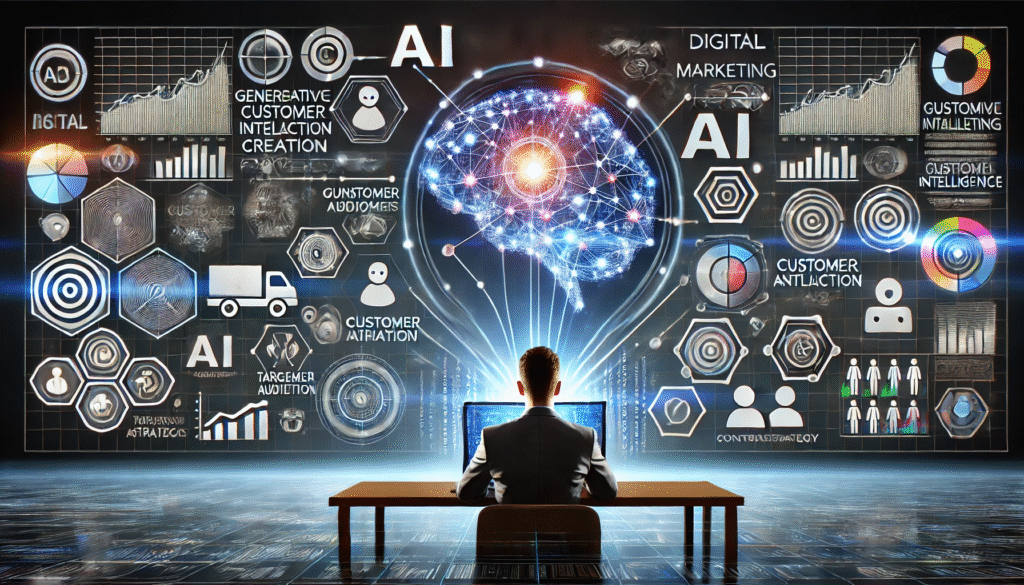
AI will continue to evolve, but one thing is certain:
Human-centered marketing will remain at the core.
The brands that succeed will be those that:
- Use AI to enhance creativity
- Make data-informed decisions
- Maintain authenticity and trust
- Stay adaptable as technology changes
AI may power marketing—but humans define its purpose.
Final Thoughts
AI-powered digital marketing is not a trend—it’s a transformation. When used correctly, AI empowers marketers to work smarter, connect deeper with audiences, and achieve sustainable growth.
The future belongs to those who combine technology with empathy, data with storytelling, and automation with intention.
The information provided in this blog is for general informational and educational purposes only. While every effort has been made to ensure accuracy, digital marketing tools, technologies, and best practices—particularly those involving artificial intelligence—continue to evolve rapidly. The author makes no representations or warranties regarding the completeness, accuracy, or reliability of the information shared. Readers are advised to conduct their own research or consult a qualified professional before making any marketing, business, or investment decisions.
#AIDigitalMarketing #ArtificialIntelligence #DigitalMarketingStrategy #MarketingWithAI #AIinMarketing #FutureOfMarketing #MarketingTechnology #MarTech #DataDrivenMarketing #ContentMarketing #SEO #MarketingAutomation #BusinessGrowth #Anslation #Carrerbook #OnlineMarketing #DigitalGrowth