

Digital marketing is evolving faster than ever, and at the center of this transformation is Artificial Intelligence (AI). What once required hours of manual work, guesswork, and repeated testing can now be handled intelligently by AI-powered tools. From understanding customer behavior to delivering highly personalized campaigns, AI is helping marketers achieve better results with smarter strategies.
In this blog, we’ll explore how digital marketing and AI work together, the key benefits, practical use cases, and how businesses can use AI to stay ahead in today’s competitive online landscape.
What Is AI in Digital Marketing?
AI in digital marketing refers to the use of machine learning, data analysis, automation, and predictive technology to improve marketing performance. Instead of relying only on human decisions, AI analyzes massive amounts of data to identify patterns, predict outcomes, and optimize campaigns in real time.
This allows marketers to:
- Understand their audience better
- Make data-driven decisions
- Automate repetitive tasks
- Improve engagement and conversions
AI doesn’t replace marketers—it empowers them.
Why AI Is a Game-Changer for Digital Marketing
Traditional digital marketing often depends on trial and error. AI changes this by offering precision, speed, and scalability.
Key Benefits of AI in Digital Marketing
- Smarter targeting based on user behavior
- Real-time campaign optimization
- Personalized customer experiences
- Higher ROI with reduced costs
- Faster decision-making
By using AI, marketers can focus more on creativity and strategy while technology handles the data-heavy work.
How AI Improves Smarter Marketing Campaigns
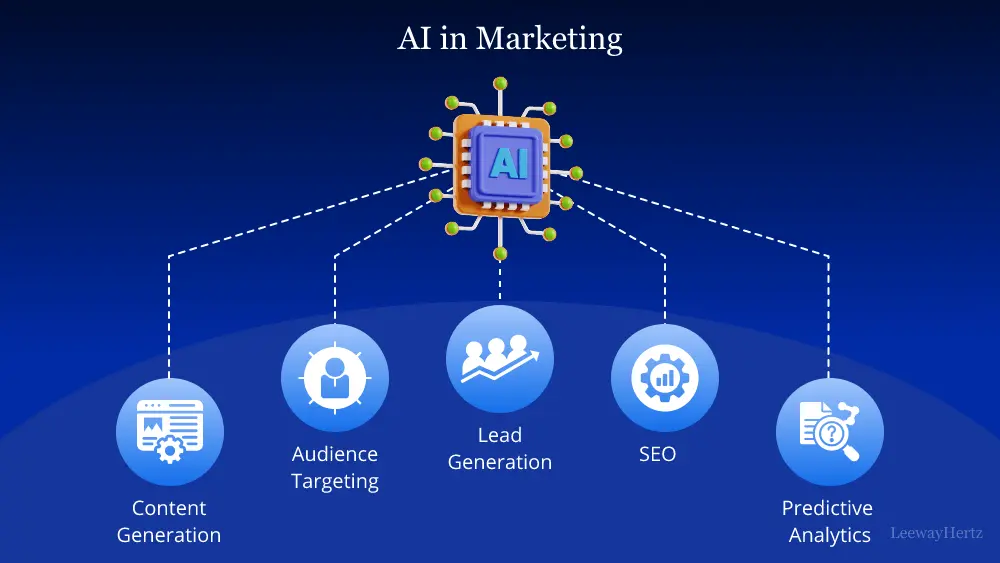
1. AI-Powered Audience Targeting
AI tools analyze user data such as search history, browsing behavior, interests, and demographics. This helps marketers reach the right audience at the right time with relevant messages.
Instead of broad targeting, AI enables micro-targeting, which leads to higher engagement and better conversion rates.
2. Personalized Content at Scale
AI makes personalization easier than ever. From email subject lines to website recommendations, AI tailors content based on individual user preferences.
Examples include:
- Personalized email campaigns
- Product recommendations on websites
- Customized landing pages
- Dynamic ad creatives
Personalized marketing builds trust and improves customer loyalty.
3. Smarter SEO and Content Strategy
AI helps digital marketers:
- Identify high-ranking keywords
- Analyze search intent
- Optimize content structure
- Predict trending topics
AI-driven SEO tools ensure content is optimized for search engines and human readers, resulting in better rankings and organic traffic.
4. AI in Paid Advertising (PPC & Social Ads)
AI improves ad performance by:
- Automatically adjusting bids
- Identifying top-performing creatives
- Optimizing ad placements
- Reducing ad spend wastage
Platforms like Google Ads and social media networks already use AI to help advertisers achieve better results with lower costs.
5. Chatbots and AI Customer Support
AI-powered chatbots provide 24/7 customer support, answer FAQs, and guide users through the buying process.
Benefits include:
- Faster response times
- Improved customer satisfaction
- Higher lead generation
- Reduced support costs
Chatbots create seamless experiences that convert visitors into customers.
6. Predictive Analytics for Better Decisions
AI analyzes past data to predict future behavior. This helps marketers:
- Forecast sales trends
- Identify potential churn
- Optimize campaign timing
- Improve budget allocation
Predictive insights allow brands to act proactively instead of reactively.
Better Results with AI-Driven Marketing
When digital marketing meets AI, results improve across all key metrics:
- Higher click-through rates
- Increased conversions
- Better customer retention
- Stronger brand engagement
AI ensures marketing campaigns are data-backed, efficient, and continuously improving.
Challenges of Using AI in Digital Marketing
While AI offers many advantages, it also comes with challenges:
- Data privacy concerns
- Dependence on quality data
- Learning curve for new tools
- Risk of over-automation
The key is to use AI strategically, with human creativity and ethical practices guiding every decision.
How to Get Started with AI in Digital Marketing
If you’re new to AI, start small:
- Use AI tools for keyword research and SEO
- Implement AI-powered email marketing
- Test AI-driven ad optimization
- Add chatbots to your website
Gradually expand as you gain confidence and insights.
The Future of Digital Marketing with AI
AI will continue to shape the future of digital marketing by making campaigns more intelligent, personalized, and results-driven. Businesses that adapt early will gain a strong competitive advantage.
The future belongs to marketers who combine human creativity with AI intelligence to deliver meaningful customer experiences.
Final Thoughts
Digital marketing and AI are no longer separate—they work best together. By embracing AI-powered strategies, businesses can create smarter campaigns, reach the right audience, and achieve better results in less time.
The information provided in this blog is for educational and informational purposes only. While every effort has been made to ensure accuracy, the content does not constitute professional, legal, financial, or marketing advice. Digital marketing strategies, tools, and AI technologies are constantly evolving, and results may vary depending on individual business goals, market conditions, and implementation methods.
#DigitalMarketing #AIMarketing #ArtificialIntelligence #MarketingAutomation #Anslation #Carrerbook #AIDigitalMarketing #SmartMarketing #OnlineMarketing #AIForBusiness #MarketingStrategy #FutureOfMarketing #ContentMarketing #SEOWithAI #DataDrivenMarketing #AITrends #BusinessGrowth