

Artificial intelligence has quietly woven itself into the fabric of our daily routines. From drafting rapid email responses and troubleshooting code to unraveling dense study topics and sparking spontaneous brainstorming sessions, tools like ChatGPT have redefined how we work, learn, and create.
However, AI is fundamentally a mirror reflecting the input it receives. The depth, nuance, and practical value of its output are directly tied to the clarity of the prompt provided. A generic, two-word query yields predictable, textbook fluff. A thoughtful, contextual prompt, on the other hand, turns ChatGPT into an exceptionally capable collaborator.
Prompting is not about learning complex code or memorizing rigid technical formulas; it is about learning how to communicate intent clearly. Whether you are aiming to streamline a high-stakes work project, master a difficult academic subject, or break through a creative wall, structuring your prompts with care dramatically improves your outcomes.
Why Prompt Precision Alters Your Output
Many people treat AI as an omniscient mind-reader, expecting brilliant insights from vague requests. When a simple instruction produces a bland answer, the issue rarely lies in the AI’s capabilities—it lies in a lack of context.
Think of ChatGPT as a highly capable assistant who has arrived on their first day. If you tell them to “prepare a report,” they will produce something generic because they don’t know your audience, tone, or goals. But if you tell them, “Draft a two-page executive summary on Q3 sales performance for our board of directors, focusing on regional growth and using a concise, professional tone,” they can deliver exactly what you need.
Effective prompts give the AI four core elements:
- Role/Persona: Who should the AI act as? (e.g., senior marketer, patient tutor, editor).
- Task: What exact action needs to be taken?
- Context & Constraints: Who is the audience? What is the word count, tone, or format?
- Output Format: Bullet points, tables, step-by-step guides, or raw text?
High-Impact Work Prompts: Supercharge Professional Productivity
In a fast-paced work environment, routine administrative tasks and communication overhead can eat up hours of deep focus time. Using targeted prompts helps you automate tedious tasks, structure complex projects, and maintain high professional standards.
1. Professional Client Communication
“Draft a courteous, highly professional email responding to a client inquiring about a delay in their project deliverable. Acknowledge the revised timeline gracefully, explain that additional quality control is underway, and reassure them of our commitment to excellence without sounding defensive.”

2. Actionable Meeting Summaries
“Transform the following raw, unorganized meeting notes into a structured summary. Include a brief executive recap, a bulleted list of key decisions made, and an action-item table with columns for ‘Task,’ ‘Owner,’ and ‘Suggested Deadline.'”
3. Step-by-Step Project Frameworks
“Act as an experienced project manager. Outline a comprehensive, 6-week launch plan for an online subscription service. Break down tasks by week, highlighting potential operational bottlenecks and key milestones.”
4. Persuasive Business Proposals
“Draft a persuasive introductory section for a business proposal offering social media management to a local boutique fitness studio. Highlight the shift toward digital engagement and explain how our services drive retention.”
5. Targeted Campaign Ideation
“Generate eight distinct, creative marketing campaign concepts for an eco-friendly kitchenware brand. Focus on low-cost, high-engagement ideas suitable for organic social media and influencer collaborations.”
6. Strategic Social Media Planning
“Develop a 5-day content calendar for a B2B software company on LinkedIn. Include a hook, core message, call to action, and relevant hashtags for each post, aiming to position the brand as a thought leader.”
7. Customer Service De-escalation

“Write a empathetic, solution-oriented response to a customer who received a damaged product. Apologize sincerely, outline the immediate replacement process, and offer a store credit to restore goodwill.”
8. Comprehensive Job Descriptions
“Draft an attractive, inclusive job description for a Senior Marketing Manager at a growing tech startup. Specify key responsibilities, required qualifications, soft skills, and a compelling ‘Why Join Us’ section.”
9. Business Presentation Architecture
“Create a 10-slide outline for a presentation on ‘Adopting AI in Human Resources.’ For each slide, provide a title, 3 key talking points, and a suggested visual element (e.g., chart, graphic, icon).”
10. Operational Productivity Strategies
“Provide five practical, evidence-based strategies for remote teams struggling with meeting fatigue and asynchronous communication friction. Format as an actionable internal memo.”
11. Rigorous SWOT Analysis
“Conduct a detailed SWOT analysis for an independent, specialty coffee shop opening in a competitive urban neighborhood. Format the output as a clean comparative grid with strategic takeaways.”
12. High-Conversion Sales Pitches

“Write a 60-second elevator pitch for a new time-tracking software tailored specifically for freelance designers. Focus on pain points like unpaid administrative hours and lost billable time.”
13. Strategic SMART Goal Setting
“Help me convert the broad goal ‘I want to grow my consulting business’ into five specific, measurable, achievable, relevant, and time-bound (SMART) objectives for the upcoming fiscal year.”
14. Behavior-Based Interview Frameworks
“Generate ten behavioral interview questions for assessing a prospective Lead Software Engineer. Focus on communication skills, handling technical debt, and mentoring junior team members.”
15. Executive Weekly Status Reports
“Format my scattered weekly accomplishments into a polished weekly progress report for my department head. Categorize entries under ‘Key Achievements,’ ‘In Progress,’ and ‘Blockers/Needs Support.'”
For students and lifelong learners, AI functions best as an interactive, highly patient private tutor. Instead of relying on it to complete assignments for you, use it to deconstruct complex topics, test your retention, and build effective study habits.
16. Concept Simplification (Feynman Technique)
“Explain the basic principles of quantum entanglement as if I am a high school student. Use everyday analogies, avoid dense jargon, and focus on the fundamental implications.”
17. Structured Study Summaries

“Transform the following text excerpt into structured study notes. Use bold main concepts, bulleted sub-points, and highlight crucial terms in a ‘Key Terminology’ section at the end.”
18. Active Recall Quizzes
“Act as a history professor. Create a 10-question multiple-choice quiz covering the key economic factors that led to the Industrial Revolution. Provide an answer key with explanations at the very end.”
19. Flashcard Generation
“Generate 15 study flashcards based on fundamental human anatomy. Format each entry clearly as ‘Front: [Question or Concept]’ and ‘Back: [Concise Definition or Answer]’ for easy exporting.”
20. Structured Essay Architecture
“Develop a logical, well-supported essay outline examining the socioeconomic impacts of global urbanization. Include a thesis statement, main paragraph topics with supporting arguments, and a strong conclusion.”
21. Grammar Refinement and Style Polishing
“Review the following academic paragraph. Correct grammatical errors, improve sentence flow, and elevate the vocabulary while maintaining my original voice and thesis.”
22. Step-by-Step Problem Solving
“Walk me through solving quadratic equations using the completing-the-square method. Show each mathematical step clearly and explain why that step is taken.”
23. Academic Article Extraction

“Summarize the core hypothesis, methodology, key findings, and limitations of the following research abstract into four brief, plain-language bullet points.”
24. Strategic Exam Planning
“Design a structured, 10-day revision schedule for an upcoming macroeconomics final exam. Assume I can dedicate two hours per day, and incorporate active recall and spaced repetition.”
25. Contextual Vocabulary Expansion
“Teach me ten advanced vocabulary words frequently found in graduate-level academic writing. Provide the phonetic pronunciation, clear definition, and two realistic example sentences for each.”
26. Balanced Debate Construction
“Provide the strongest, most compelling arguments for both sides of the debate surrounding universal basic income (UBI). Structure the response as a balanced comparative table.”
27. Literary Analysis
“Analyze the primary themes of ambition and guilt in Shakespeare’s Macbeth. Highlight how specific motifs, such as blood and sleep, serve to reinforce these central themes.”
28. Conversational Language Practice
“Act as a friendly, patient Spanish language tutor. Conduct a basic conversational dialogue with me about ordering food at a restaurant. Correct my grammar gently after each response.”
29. Cognitive Science Retention Strategies
“Explain three scientifically proven memory techniques (such as the Method of Loci or Spaced Repetition) and show me step-by-step how to apply them to memorizing historical dates.”
30. Skill Acquisition Roadmaps

“Create a comprehensive, beginner-friendly roadmap for learning Python for data analysis over 3 months. Break the journey down by week, recommending specific core concepts to master.”
Creative blocks often stem from faced with a blank canvas. AI can act as a sounding board, helping you generate novel concepts, experiment with structure, and refine your creative vision
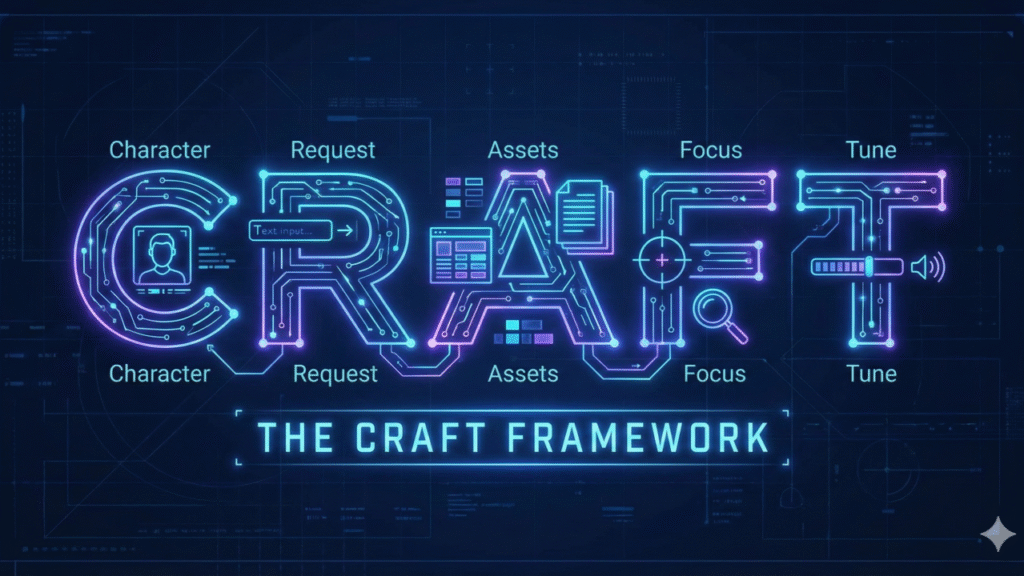
Crafting Your Own Prompts: A Framework for Consistently Better Results
While template prompts provide a great starting point, learning to write your own prompts on the fly gives you complete control over your results. When building a prompt from scratch, run it through this quick checklist:
Mistakes to Watch For
- Assuming Background Knowledge: Avoid saying, “Write an analysis of our new policy.” Instead, say, “Analyze the following 3-paragraph company policy regarding remote work, focusing on potential pain points for parents.”
- Ignoring Your Audience: A guide written for software engineers will sound completely out of place if delivered to non-technical stakeholders. Always name your target audience.
- Overlooking Output Structure: If you don’t want a wall of text, ask for what you need explicitly—whether that’s bullet points, bold headings, or a comparative table.
Mastering prompt writing is an iterative process. Treat the first output as a working draft. If the tone is off, ask the AI to make it more concise; if an explanation is too dry, ask for an analogy. By guiding the conversation, you can turn artificial intelligence into a tailored, highly productive partner for your daily tasks.
FAQ’S
1. What is a ChatGPT prompt?
A ChatGPT prompt is a question or instruction you give the AI to generate relevant, accurate, and helpful responses.
2. How do I write a better ChatGPT prompt?
Be specific about your goal, provide context, define the desired tone, and mention the format you want for the best results.
3. Can ChatGPT prompts improve productivity?
Yes. Well-crafted prompts can help with writing, research, planning, coding, brainstorming, and many other tasks, saving time and effort.
4. Are ChatGPT prompts useful for students and professionals?
Absolutely. Students can use prompts for learning and exam preparation, while professionals can use them for emails, reports, presentations, and project planning.
5. Can I customize ChatGPT prompts for different tasks?
Yes. You can tailor prompts for work, study, content creation, marketing, programming, business, or any other specific need to get more relevant responses.